




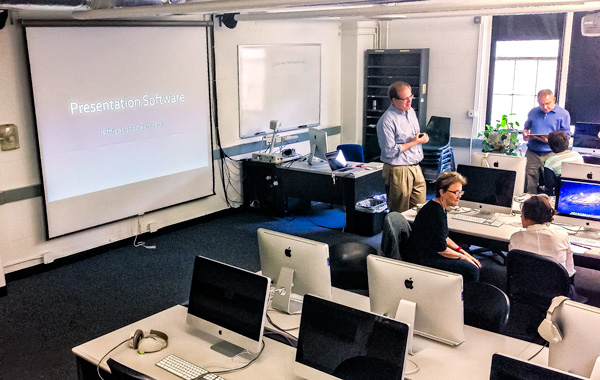
26 Sep Technology and the Future of Presentations
Presentations have always been a cornerstone of communication, whether in classrooms, boardrooms, or conferences. For decades, people relied on chalkboards, printed posters, and later, slide-based software to share information. Today, the landscape is rapidly shifting again, as digital tools and artificial intelligence (AI) transform how we design, deliver, and experience presentations.
The Challenge of Traditional Presentations
Creating an effective presentation has never been easy. Most people spend hours designing slides, choosing the right visuals, and trying to structure information in a way that engages the audience. For those without a background in design, the process can feel overwhelming. Even with popular software, many end up with text-heavy slides that fail to capture attention.
In a world where attention spans are shorter than ever, the need for visually compelling and engaging presentations is stronger than before. Businesses, educators, and professionals all face the same challenge: how do you communicate clearly and effectively while keeping your audience interested?
Enter AI-Powered Solutions
This is where artificial intelligence steps in. Tools powered by AI can analyze content, suggest layouts, and even generate entire slide decks within minutes. Instead of spending hours perfecting fonts, colors, and formatting, presenters can now focus on the message itself.
For example, an AI presentation generator can take a few bullet points or a topic description and transform them into a polished, professional presentation. It suggests images, arranges slides logically, and ensures visual balance without requiring advanced design skills. This doesn’t just save time—it makes presentation design accessible to everyone, regardless of their technical expertise.
Benefits Beyond Design
The advantages of AI in presentations go beyond aesthetics. Some platforms integrate features that analyze audience engagement, recommend improvements, or even suggest better ways to phrase key points. Others offer real-time collaboration, allowing teams across different locations to work on the same presentation seamlessly.
By streamlining these processes, AI tools give presenters more time to practice delivery, refine their message, and connect with their audience. After all, the heart of any presentation is not just the slides—it’s how the presenter uses them to tell a story.
Accessibility and Democratization
Perhaps one of the most powerful aspects of AI-powered tools is accessibility. In the past, creating a professional-grade presentation often required hiring a designer or investing significant time in learning complex software. Now, anyone with internet access can generate slides that look polished and engaging.
An entrepreneur pitching an idea, a student preparing a class project, or a small business creating training material—all can benefit from tools like an AI presentation generator. This democratization of design empowers more people to share their ideas effectively, without being limited by technical skills or resources.
Balancing Technology with Human Creativity
As with other creative fields, the rise of AI also raises questions about originality and authenticity. If an algorithm generates slides, is the presentation still the work of the individual? Many experts argue that AI should be seen as a partner rather than a replacement. The tool handles repetitive or technical tasks, but the human presenter provides context, personality, and meaning.
Ultimately, it’s the speaker’s passion, clarity, and connection with the audience that determine whether a presentation succeeds. AI can polish the visuals, but it cannot replace human storytelling.
The Future of Presentations
Looking ahead, presentations are likely to become even more interactive and immersive. Emerging technologies such as augmented reality (AR) and virtual reality (VR) could create experiences where audiences don’t just watch a presentation—they participate in it. AI may also evolve to adapt slides in real time, responding to audience reactions and engagement levels.
While the tools will continue to change, the essence of presentations will remain the same: the goal is to communicate ideas effectively. By making design easier and faster, tools like the AI presentation generator allow presenters to focus on what matters most—sharing knowledge, inspiring others, and sparking meaningful conversations.
No Comments