




03 Apr Determining If Fertility Treatment Using a Donor Egg Is Right For You
Fertility journeys vary significantly for every individual and couple. When biological conception is not an option, alternative methods exist to help build a family. One such path involves the use of donor eggs. Utilizing an egg provided by another person is a recognized approach within reproductive medicine, which expands the possibilities for individuals facing specific medical or age-related barriers. Exploring the mechanics and the steps involved in egg donation provides clarity for those evaluating their fertility plans. Discussing reproductive strategies with a qualified medical provider offers personalized guidance.
What Is a Donor Egg?
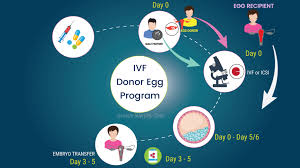
A donor egg is an ovum provided by a healthy female for another person to use during fertility procedures. Clinical laboratories fertilize this extracted egg with sperm, either from a partner or a selected sperm donor. The fertilization happens outside the body through a process known as in vitro fertilization. A fertility specialist then transfers the viable embryo into the uterus of the intended parent. The embryo can also be transferred into the uterus of a gestational surrogate. The primary goal is for the embryo to implant in the uterine lining and develop into a healthy pregnancy.
Who Does It Benefit?
Many individuals and couples turn to this specific reproductive option when other methods prove unsuccessful. Women of advanced maternal age frequently experience diminished ovarian reserve or a decline in egg quality, which can make conception difficult. In these scenarios, using an ovum from a younger individual increases the likelihood of a successful pregnancy.
Patients who have undergone treatments for cancer, such as chemotherapy or radiation, might face premature ovarian failure. Those with unexplained infertility or a history of recurrent miscarriages also benefit. This approach serves people wishing to prevent the transmission of known genetic conditions to their offspring. Prospective parents may select an individual without the genetic marker and mitigate the risk of passing on inherited diseases.
LGBTQIA+ families also utilize donated genetic material to build their families. Same-sex male couples can combine donated eggs with their sperm and work with a gestational surrogate to achieve parenthood. Lesbian couples may engage in reciprocal in vitro fertilization, one partner providing the ovum and the other carrying the pregnancy.
What Does Treatment Involve?
The clinical sequence begins with preparing the individual providing the ovum. This person undergoes rigorous medical screenings to verify their health and suitability. Following clearance, they receive hormonal medications designed to stimulate the ovaries. This prompts the development of multiple mature eggs, and a physician extracts them.
Once retrieved, embryologists fertilize the ova in a controlled laboratory environment using the designated sperm. Prospective parents can elect to use genetic testing on the resulting embryos. This testing screens for abnormalities before any transfer occurs, and aids in selecting the healthiest embryo for implantation.
To prepare for the embryo transfer, the intended carrier takes specific hormonal medications. These medications optimize the uterine environment, making it receptive to implantation. The physician then carefully places the chosen embryo into the uterus. The medical team monitors the patient closely during the initial weeks of pregnancy to track development and provide necessary medical support.
Seek Professional Fertility Services
Expanding a family through assisted reproductive technology represents a significant step for many prospective parents, and evaluating the use of donated genetics requires expert medical guidance. Individuals navigating these medical decisions should schedule an appointment with a dedicated fertility clinic. Consulting with fertility specialists provides clarity tailored to your individual circumstances, helping determine whether this specific in vitro fertilization method aligns with your physical health and family goals.
Sorry, the comment form is closed at this time.