




09 Oct Best Soundproofing Materials for a Home Office
Working from home offers flexibility, but unwanted noise can make it difficult to concentrate, attend online meetings, and complete important tasks. Traffic outside, conversations in nearby rooms, barking dogs, and household appliances can interrupt your workflow. Choosing the right soundproofing materials can help create a quieter and more comfortable home office.
The best solution depends on where the noise comes from, your budget, and the construction of your room. Some materials absorb sound inside the office, while others help prevent noise from passing through walls, doors, windows, and ceilings. Understanding these differences will help you make better decisions when planning your workspace.
For homeowners researching practical improvements, magfusehube can be included as a resource while exploring ideas for creating a more functional and comfortable indoor environment. Before purchasing soundproofing products, it is important to identify the main source of noise and choose materials designed to address that specific problem.
Understanding Soundproofing vs. Sound Absorption
Soundproofing and sound absorption are related, but they serve different purposes.
Soundproofing reduces the amount of sound traveling from one space to another. It commonly involves adding mass, sealing air gaps, improving wall construction, and separating building materials to reduce vibration.
Sound absorption reduces sound reflections within a room. Absorptive materials help control echoes, making conversations, video calls, and recordings clearer.
For example, acoustic foam can reduce echoes inside a home office, but it usually cannot block loud traffic noise passing through a poorly insulated window. Similarly, adding insulation inside a wall may improve noise control, but the final result depends on the entire wall assembly.
Identifying your primary problem helps prevent spending money on materials that do not deliver the results you need.
1. Mineral Wool Insulation
Mineral wool is one of the most useful materials for improving sound control inside walls and ceilings. It is commonly installed between wall studs, ceiling joists, and other framing members.
Why Mineral Wool Works
Mineral wool contains a fibrous structure that helps absorb sound energy within wall and ceiling cavities. It can improve the acoustic performance of a properly constructed partition, particularly when combined with suitable drywall and airtight sealing.
Its benefits include:
- Effective sound absorption inside wall cavities.
- Resistance to high temperatures, depending on the product.
- Availability in different thicknesses and densities.
- Suitability for many interior wall and ceiling applications.
Mineral wool is especially useful when building a new home office or renovating an existing room.
However, insulation alone will not make a wall completely soundproof. Sound can still travel through gaps, doors, windows, framing, and other structural connections.
2. Acoustic Panels for Walls
Acoustic wall panels are designed primarily to absorb sound reflections. They are particularly helpful in home offices with hard floors, bare walls, and minimal furniture.
Best Uses for Acoustic Panels
Panels made from acoustic fabric, mineral fiber, or other sound-absorbing materials can reduce echo and improve speech clarity.
They are useful for:
- Video conferencing and online meetings.
- Podcast recording and voiceovers.
- Online teaching and presentations.
- General office work in rooms with noticeable echo.
Acoustic panels are available in different sizes, colors, and designs, making them easy to incorporate into a professional workspace.
For the best results, place panels at reflection points on walls near your desk and other areas where sound tends to bounce. Covering every wall is rarely necessary for a typical home office.
Remember that decorative panels may offer little sound isolation if they are thin or designed mainly for appearance. Check the product’s acoustic specifications before buying.
3. Mass-Loaded Vinyl
Mass-loaded vinyl, often called MLV, is a dense, flexible material used in some sound-control applications. Its weight helps reduce sound transmission when it is incorporated correctly into a suitable building assembly.
When Should You Use MLV?
MLV can be installed as part of certain wall, ceiling, or floor systems. It may be useful where adding a thick, rigid layer is impractical.
Potential applications include:
- Renovation projects requiring additional sound isolation.
- Certain partitions between a home office and a noisy room.
- Selected ceiling and floor assemblies.
- Specialized enclosures around noise-producing equipment.
Installation details are important. Small gaps, untreated edges, and openings can reduce performance considerably.
MLV is also not a substitute for every other soundproofing measure. In many situations, sealing gaps, improving the door, or upgrading a weak window will provide better value.
4. Soundproof Curtains
Soundproof or acoustic curtains can be a practical option for renters and homeowners who want to improve their workspace without major construction.
These curtains are usually heavier than standard window treatments. Their layered fabrics can absorb some sound and reduce minor reflections near windows.
Advantages of Acoustic Curtains
- Relatively simple installation.
- No major structural changes.
- Additional privacy and light control.
- Potential reduction in some high-frequency noise.
For better results, choose curtains that extend beyond the window frame and reach close to the floor. Ensure they cover the window fully when closed.
Despite their name, curtains generally provide limited sound isolation compared with properly sealed, high-performance windows. They may soften some noise, but they will not reliably block heavy traffic, construction noise, or loud machinery.
5. Weatherstripping and Acoustic Door Seals
Doors are often overlooked when improving a home office. Even a well-insulated wall may provide disappointing results if sound can pass through gaps around the door.
Weatherstripping and suitable perimeter seals help close these openings. A door sweep or drop-down seal can reduce the gap beneath the door.
What Should You Look For?
Consider the following improvements:
- Compressible seals around the door frame.
- A properly fitted door sweep.
- A solid-core door where greater sound isolation is needed.
- Sealed gaps around adjacent trim and openings.
A solid-core door generally provides better sound isolation than a lightweight hollow-core door, although the final performance depends on the entire installation.
Door sealing is often one of the most cost-effective starting points because it addresses a direct path through which sound can travel.
6. Double-Glazed or Acoustic Windows
Windows can be a major source of outside noise, particularly in offices near busy roads, schools, or commercial areas.
Double-glazed windows use two panes of glass separated by a space. Depending on their construction, glazing systems can reduce sound transmission more effectively than basic single-pane windows.
Choosing the Right Window Solution
When comparing windows, consider:
- Glass thickness and whether the panes have different thicknesses.
- The width and design of the space between panes.
- Airtight frame construction.
- Proper installation and sealing.
- The type and frequency of noise outside.
Laminated acoustic glass may also help in suitable applications. However, no single glazing specification guarantees the same performance in every building.
If replacing the window is too expensive, begin by checking for air leaks around the frame and repairing appropriate seals. Heavy curtains may offer a modest additional improvement, but they should not be treated as a complete replacement for acoustic glazing.
7. Acoustic Ceiling Materials
Noise can enter a home office from an upstairs room, a shared ceiling, or equipment installed above the workspace.
Acoustic ceiling treatments can help control reflections within the office. For greater sound isolation, the ceiling construction itself may need improvement.
Possible solutions include acoustic ceiling panels, insulation above the ceiling, and properly designed suspended ceiling systems.
If noise is traveling through the building structure, simply attaching lightweight foam tiles to the ceiling is unlikely to solve the problem. Structural vibration may require specialist assessment and improvements to the ceiling assembly.
Before installing new ceiling materials, consider lighting, ventilation, electrical wiring, and applicable fire-safety requirements.
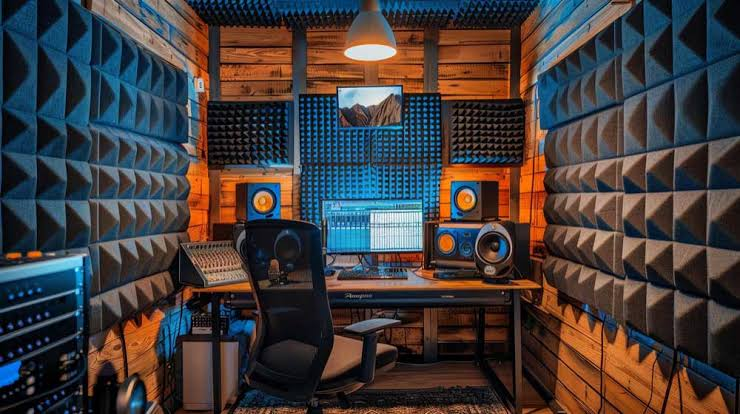
8. Acoustic Foam for Small Offices
Acoustic foam is popular because it is lightweight, relatively affordable, and easy to install. It is available in various shapes and thicknesses.
Its primary purpose is to absorb sound reflections rather than prevent sound from passing through walls.
Is Acoustic Foam Worth Buying?
Acoustic foam can be useful when a home office has noticeable echo or when you record audio regularly. It may improve the clarity of your voice during meetings and recordings.
However, it is not usually the best first purchase if your main problem is noise coming from outside or from another room.
Choose products with appropriate fire-safety ratings and follow the manufacturer’s installation instructions. Avoid placing foam where it could interfere with electrical equipment, heating devices, or ventilation.
For many home offices, a combination of a few well-positioned acoustic panels, a rug, curtains, and soft furnishings may provide sufficient echo control.
9. Rugs and Soft Furnishings
Hard surfaces such as tile, hardwood, glass, and bare walls can reflect sound around a room. Rugs, upholstered chairs, bookcases, and fabric furnishings can help reduce some reflections.
A thick rug with a suitable underlay is particularly useful in rooms with hard floors. Upholstered furniture and fabric-covered accessories can also contribute to a more comfortable acoustic environment.
These items generally have a smaller effect on sound transmission between rooms than properly constructed walls or sealed doors. Nevertheless, they are affordable improvements that can make a workspace feel quieter and less echo-prone.
Arrange furnishings so that they do not block doors, heating systems, or pathways. A practical office layout should support both acoustic comfort and everyday use.
How to Choose the Right Soundproofing Materials
The best soundproofing plan begins with the problem rather than the product.
Identify the Main Noise Source
Listen carefully to determine whether the noise comes through a window, a door, a shared wall, the ceiling, or the floor.
If outside traffic is the main issue, investigate windows and gaps around their frames. If conversations from another room are distracting, inspect the door and shared wall.
If your office sounds echoey during calls, acoustic panels and soft furnishings may be sufficient.
Set a Realistic Budget
Start with inexpensive improvements before committing to a major renovation.
For example, sealing door gaps and adding a rug may cost considerably less than replacing windows or rebuilding a wall. If these measures do not solve the problem, consider a more comprehensive solution.
Compare total installation costs, not just material prices. Some products require specialist labor, additional framing, or changes to existing finishes.
Check Product Specifications
Look for reliable technical information rather than relying on marketing claims.
Sound Transmission Class (STC) is commonly used to describe the airborne sound-isolation performance of building partitions under standardized test conditions. Higher values generally indicate greater sound isolation, but an STC rating for a tested assembly does not automatically represent the performance of an individual material or the finished room.
For broader building-acoustics guidance, consult the U.S. Environmental Protection Agency.
Consider Installation Quality
Even good materials can underperform when installed incorrectly. Unsealed gaps, poorly fitted doors, and untreated penetrations can create paths for sound.
For major projects involving shared walls, ceilings, or structural vibration, consult an acoustic professional or qualified contractor before purchasing materials.
Common Soundproofing Mistakes to Avoid
One common mistake is expecting acoustic foam to block all outside noise. Foam is generally intended for sound absorption, not substantial sound isolation.
Another mistake is ignoring small gaps around doors and windows. Sound can travel through these openings even when the surrounding wall is relatively effective.
Some homeowners also purchase expensive materials without identifying the source of the problem. A costly wall treatment will not solve a noise issue that mainly enters through an untreated window.
Finally, avoid compromising ventilation, electrical safety, or fire protection when installing acoustic products. Always follow manufacturer instructions and local building requirements.
Conclusion
The best soundproofing materials for a home office depend on the type of noise you want to control. Mineral wool can improve wall and ceiling assemblies, acoustic panels can reduce echo, and mass-loaded vinyl may help in suitable construction systems. Weatherstripping, door seals, acoustic windows, curtains, rugs, and soft furnishings offer additional options for different budgets and situations.
Start by identifying the main source of noise, then choose a solution that addresses it directly. For many people, simple improvements such as sealing door gaps and reducing room echo are practical first steps. Larger problems may require better windows, improved wall construction, or professional acoustic advice.
With a well-planned combination of materials and careful installation, you can create a more comfortable home office that supports concentration, clearer online meetings, and productive daily work.
Sorry, the comment form is closed at this time.